

Anxiety Coach brings Mayo Clinic‘s pioneering exposure therapy program for children and teens with anxiety disorders and obsessive-compulsive disorder (OCD) to the pages of a book. Child psychologist Stephen P. Whiteside walks concerned parents and caregivers through the A to Z of anxiety disorders, separating when and when not to worry, what mental health conditions may be underlying symptoms, offering guidance on when to seek professional help, and then bringing all this information together in highly accessible and user-friendly how-to guidelines that for the first time helps families implement exposure therapy at home.
Stephen P. Whiteside took time out of his busy child anxiety disorders clinic to answer questions about the motivations behind the writing of Anxiety Coach, what exposure therapy is, and how he hopes bringing exposure therapy to popular access as a set of self-help tools will help families and their children reduce the impact of anxiety.
What inspired you to write Anxiety Coach?
One of the main challenges facing families dealing with childhood anxiety disorders is the difficulty of finding the right kind of therapist to help them. That is what led my team at Mayo Clinic to develop our five-day intensive treatment program and it is the same inspiration behind my writing Anxiety Coach. My hope is that for families with children who have more mild anxiety symptoms, reading this book will be enough to help them address those worries and fears on their own. For families whose children have higher levels of anxiety, the book can explain to parents what the best treatment looks like, so they can know what to look for when trying to find the right therapist to best help their child.
You are Mayo Clinic’s expert in the treatment of anxiety, phobias, and OCD in children and teens with exposure therapy. What exactly is exposure therapy?
Exposure therapy is a form of therapy that helps kids face their fears and learn through their own experience that what they are afraid of is unlikely to happen, and that they can handle feeling anxious until those feelings go away. Our job as therapists is to help kids and their parents understand that avoiding what makes the child nervous — whether that’s speaking in class, crossing a bridge or eating in a noisy school cafeteria — helps them feel better in the moment, but their anxiety continues over time because the fear just gets bigger. Using exposure therapy techniques, Anxiety Coach shows parents how to set up little experiments with their child to help them gradually face their fears. This builds confidence over time and with practice, exposure therapy helps the child’s anxiety decrease.
Where does the title Anxiety Coach come from?
The title communicates ideas central to the work we do at Mayo Clinic as well as the book. The first idea is that the treatment of anxiety is an active process. The second idea is that kids can benefit from somebody helping them through treatment. Most of us are familiar with the idea of a coach, somebody who is warm, fun and supportive, but at the same time pushes you to work hard, do your best and improve. When we are working with kids with anxiety at Mayo Clinic, we try to have a similar mindset. We have to be positive, warm, active and help kids face their fears in real time as we are working with them, as opposed to sitting and talking to them about doing exposures on their own. For kids with anxiety that is affecting their daily lives, having an anxiety coach goes a long way in supporting them to get better.
Is exposure therapy a first response for mild to moderate anxiety? Or should that be counseling? For example, a school counselor or privately sought out therapist and if that fails, then go to exposure therapy as second on the list?
If a child has an anxiety disorder, which we define as being more nervous, worried or afraid than we would expect them to be in that situation, then exposure therapy makes for a very appropriate and effective first response. It is important, however, to accurately understand if what a child is experiencing is consistent with an anxiety disorder before beginning exposure therapy. That is why I devote the first half of the book to defining what an anxiety disorder is and showing parents how to work with their kids to decide if that does indeed describe what their child is experiencing. If it is, then exposure therapy is the most efficient treatment for excessive fears and worries.
Can families go straight to using the exposure therapy method set out in Anxiety Coach if their child or teen has anxiety that is causing them day-to-day challenges, or do they need to route through a professional assessment with their kid’s family doctor first?
Underlying the treatment that we do at Mayo Clinic is the assumption that parents can effectively coach their child through exposure exercises, especially with our five-day intensive treatment program where families can come and stay with us for a week, complete the program, and then go back home. We spend time teaching the child and parents how to do exposure therapy together so they can continue to do it on their own if they do not have a therapist licensed for exposure therapy in their home area. However, in our clinic we decide together whether or not an anxiety disorder best describes the child’s experience, help the family learn about exposure therapy, and then help them get started with treatment with our hands-on support. Whether a family can do this on their own at home using “Anxiety Coach” as a guide will depend on the severity of their child’s symptoms. My hope in writing this book is that for families whose child is dealing with mild to moderate anxiety, the process of learning about what an anxiety disorder is and how exposure therapy can be used to decrease symptoms is hopefully enough. For families whose children are struggling with higher to severe levels of fears and worries, Anxiety Coach is a starting point to help them understand what is happening better and then how to seek out effective treatment.
If after reading Anxiety Coach, families want to explore enrolling their child or teen into your world-renowned exposure therapy program at Mayo Clinic, how long does a program of exposure therapy typically last?
That varies widely. In our local program where people come once a week most families attend between six and eight appointments, spread out over several months. Even with our five-day intensive treatment program where families spend a week with us, we expect them to keep completing exposures on their own for the next few months. That is about the same as most research studies that indicate improvement with treatment at about the three-month mark. So, families should probably expect to see gradual progress over three months. We always encourage kids and their families to embrace exposure therapy as a way of life that should be continued and maintained as a routine in order to confidently manage ongoing challenging situations.
If there is one tip in the book for managing anxiety that you would like every parent of every anxious child reading this article to take away now, what would it be?
If your child is more afraid or worried about their situation then you would expect them to be, then warmly and patiently helping them to face their fears rather than avoid situations that trigger or reinforce the fear is the most effective solution. Anxiety Coach shows a family how to do this and more in simple, easy-to-follow steps.
Relevant reading
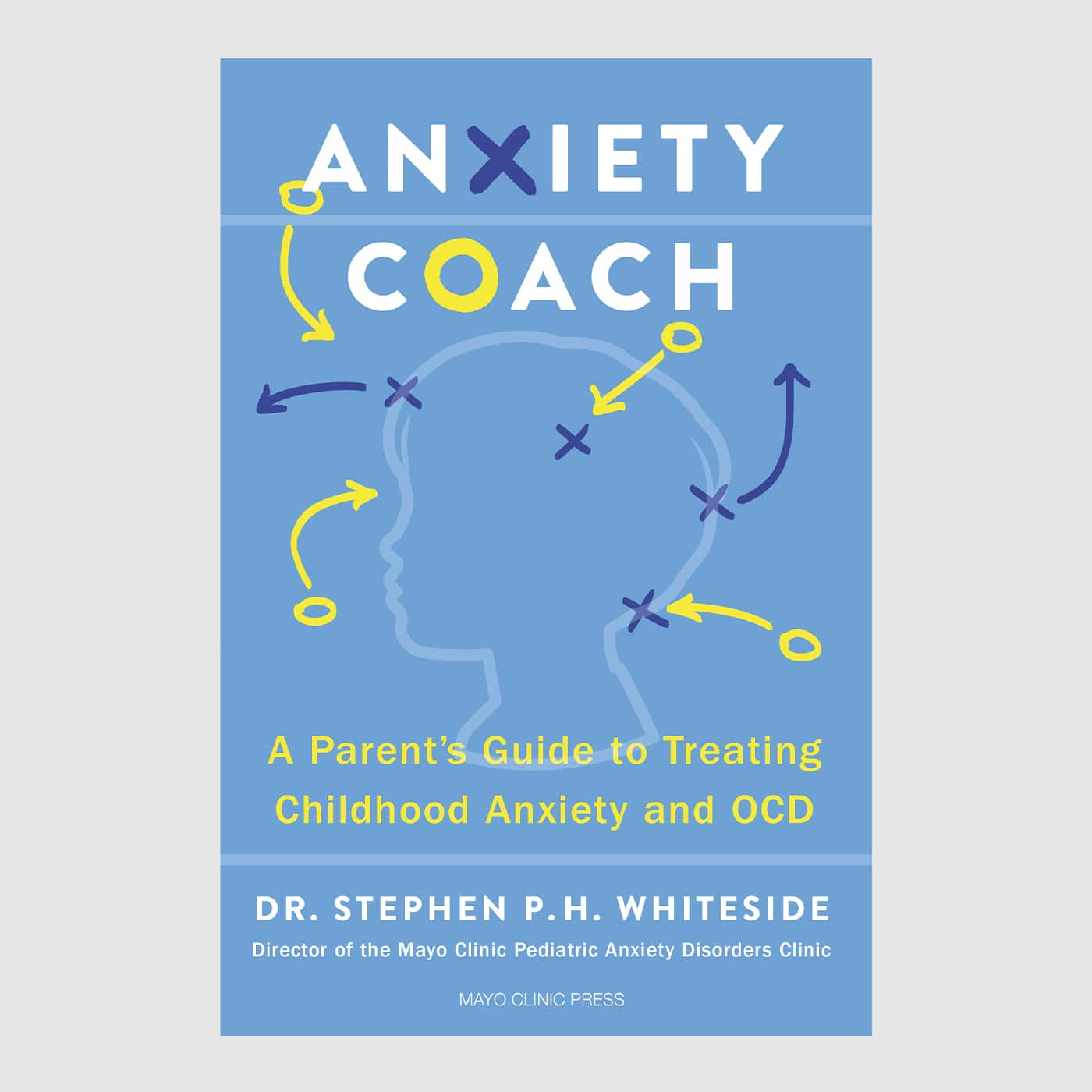
Anxiety Coach
An essential resource to address anxiety disorders and OCD in children and teenagers, from a prominent researcher and psychologist at Mayo Clinic.
Relevant reading
Heal Your Gut, Save Your Brain
NEW YORK TIMES BESTSELLER Cognitive decline is not your destiny. You can improve your brain function through small steps taken every day. Heal Your Gut, Save Your Brain, by gastroenterologist and health advocate Dr. Partha Nandi, highlights the latest research on the gut-brain connection and gives you a clear protocol…
Want more children’s health and parenting information? Sign up for free to our email list.
Subscribe Open parent optin subscribe modal